Jaime Cibrán

Home UX Projects Videogames Projects Download CV


UX Projects


Arcadia


Year: 2026


Tools: Figma, FigJam, Interviews, Google Forms, Excel


My role: UX Reseach, Interaction Design


PDF Master's Thesis (Spanish)


The what

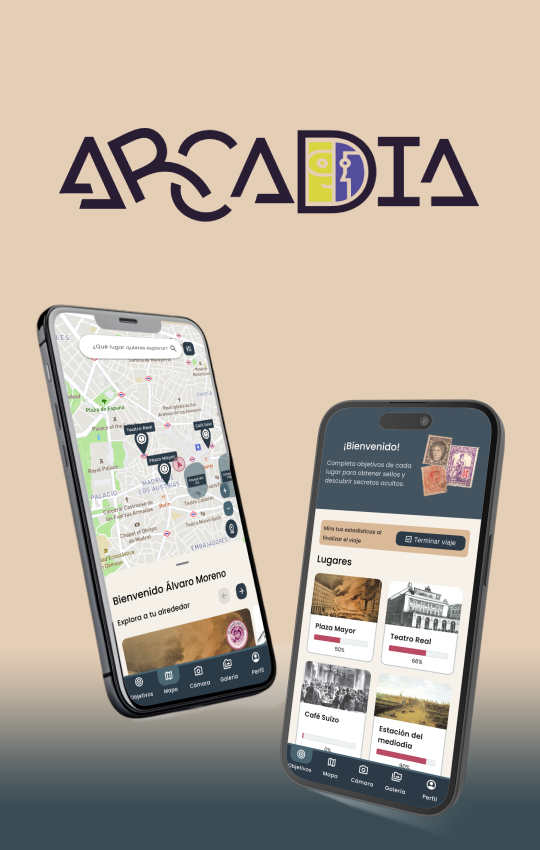
Arcadia is a Master’s thesis project focused on improving the cultural tourism experience in Madrid. The proposal combines themed routes, storytelling, augmented reality, and subtle gamification elements to offer a more engaging and immersive way of discovering the city’s heritage and history.

Its aim is to spark visitors’ curiosity and help them discover Madrid from a different perspective, connecting the present-day city with the stories and events that are part of its past.

This project is part of a research initiative at UDIT University. My role as a UX Designer was to develop a design proposal that could be used in future stages of the project.

The experience takes as its starting point the Madrid described by Pedro Antonio de Alarcón in his bookDe Madrid a Nápoles, using gamification as a way to maintain visitors’ curiosity and attention throughout the journey.


Hypothesis

Conventional tourism encourages a superficial consumption of destinations, where experiences tend to become homogeneous and places gradually lose their sense of uniqueness. Transforming urban exploration into an experience built around interactive local narratives could foster a deeper, more distinctive, and more personal connection with the environment.


Why is a system like Arcadia necessary?


The problem


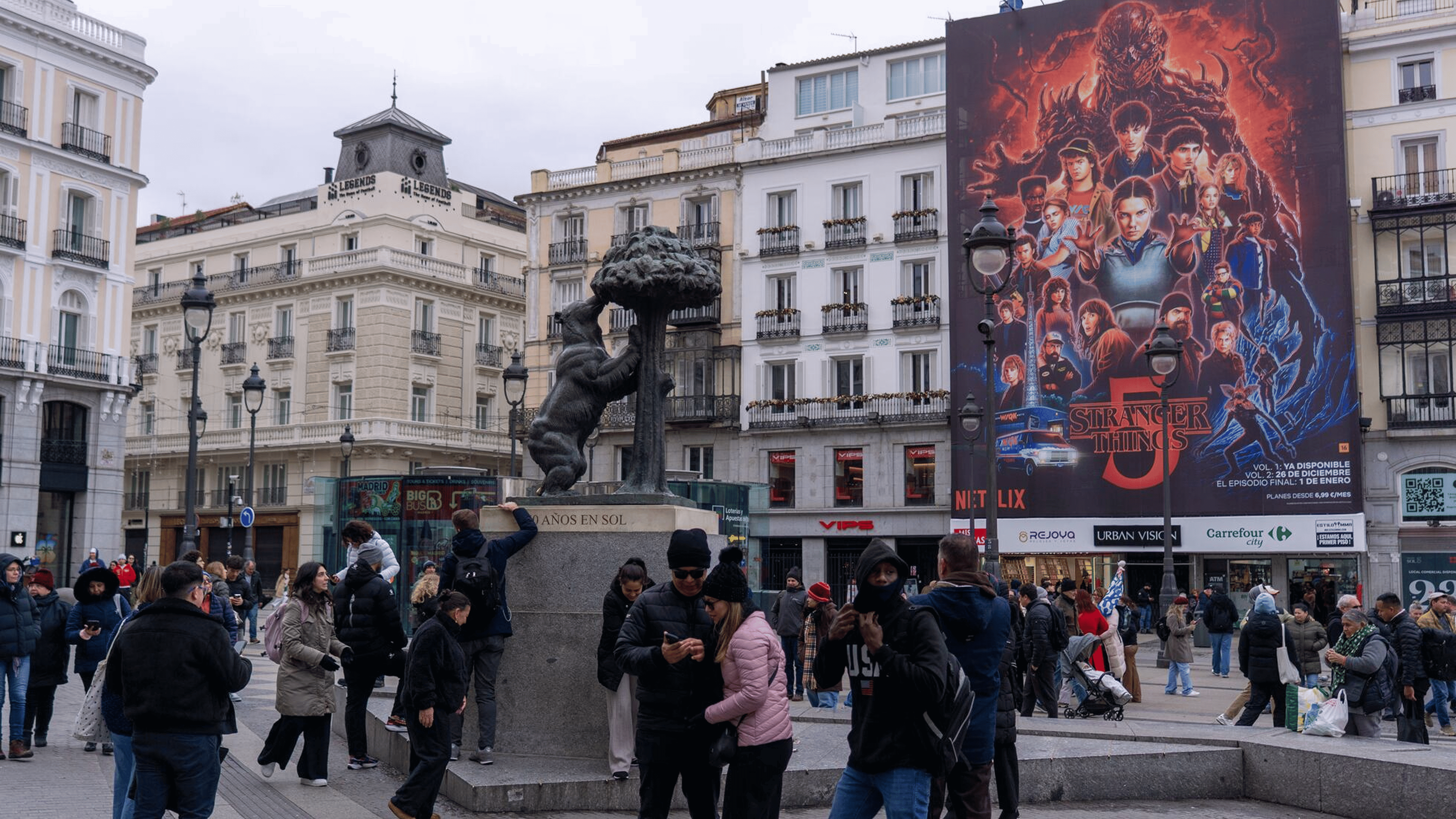
Representations of “Non-places” and “Non-things” in the City of Madrid

Visitor fatigue highlights how attention tends to decline during prolonged tours, particularly when visitors are exposed to an excess of information or cognitive effort.

his is further compounded by a growing disconnection from physical space. Marc Augé introduced the concept of “non-places” to describe spaces that lose their identity and distinctiveness, while Byung-Chul Han explores the idea of “non-things” — dematerialized digital information that can shift our attention away from tangible reality.

These dynamics can make it more difficult to understand and engage with cultural heritage, reducing the visitor’s involvement throughout the journey. The challenge is therefore not simply to provide access to information, but to integrate it naturally into the experience, helping visitors maintain a connection with the space, its history, and the elements that make it unique.

Source:
Cano, R. (2018). Museos y fatiga del visitante.
EVE Museos + Innovación.

Research

To understand how people explore Madrid and what they expect from a cultural tourism experience, a mixed-methods research approach was conducted, combining qualitative and quantitative techniques.

Methodology


  • Interviews:: 9 interviews were conducted with participants recruited at tourist and cultural points of interest across Madrid. Each interview lasted between 15 and 30 minutes..

  • Survey: 101 users were surveyed about their experience visiting Madrid, as well as their use of technology and gamification.

  • Netnography: Online content and conversations related to cultural tourism were analysed across Google Maps, TripAdvisor, Reddit, YouTube and TikTok.


Participants


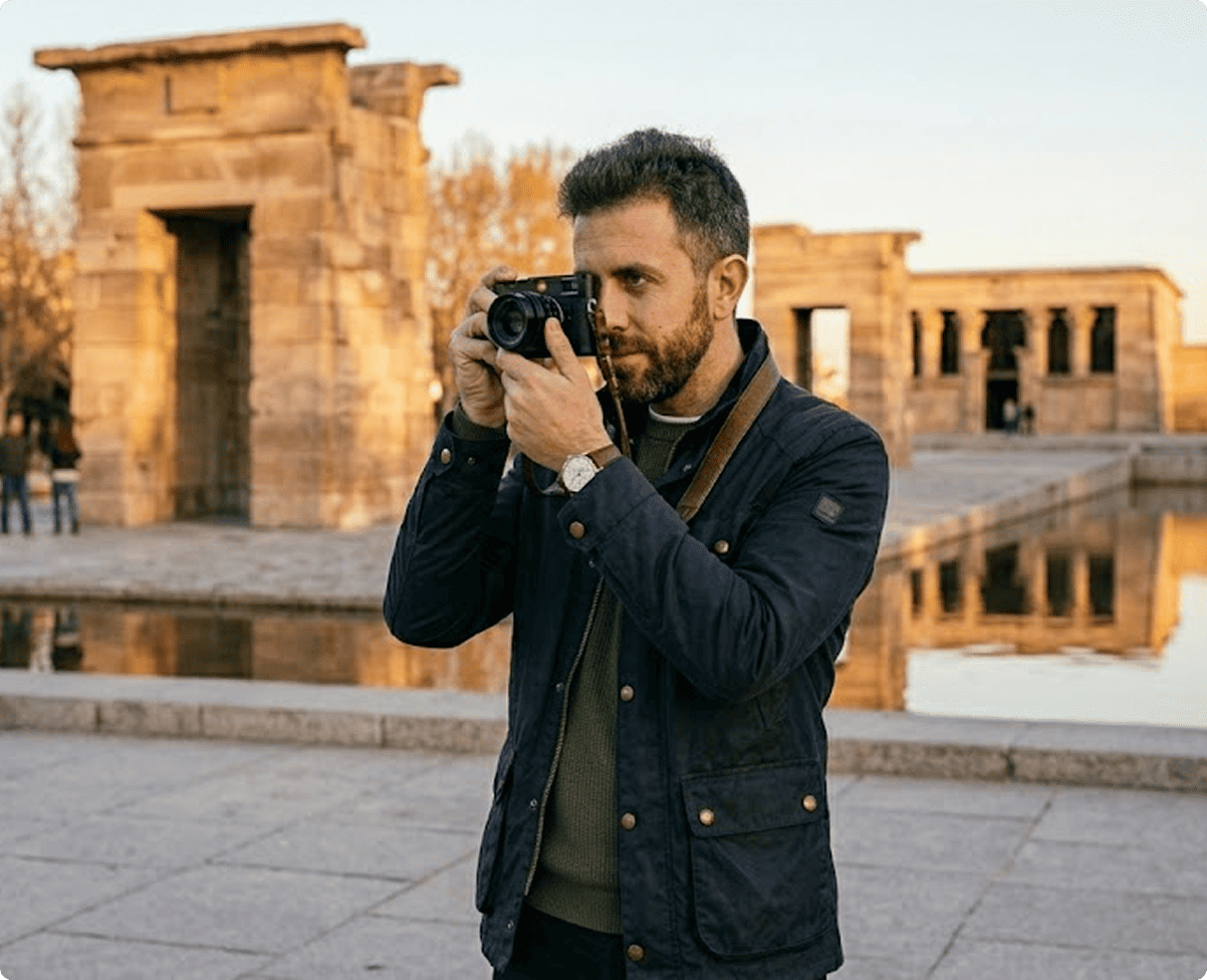
Users aged 25 to 40 who were visiting Madrid. We looked for both first-time visitors and people who were already familiar with the city and were looking for a less conventional experience.


“Madrid is losing part of its essence.”

I like having a route, but I also want the freedom to take a detour.”

“I’d rather experience the history of a place than collect points.”

“I find it difficult to imagine what the place looked like in the past.”

“I’d rather experience the history of a place than collect points.”


Voices from the field: Collection of direct quotes from the interviews
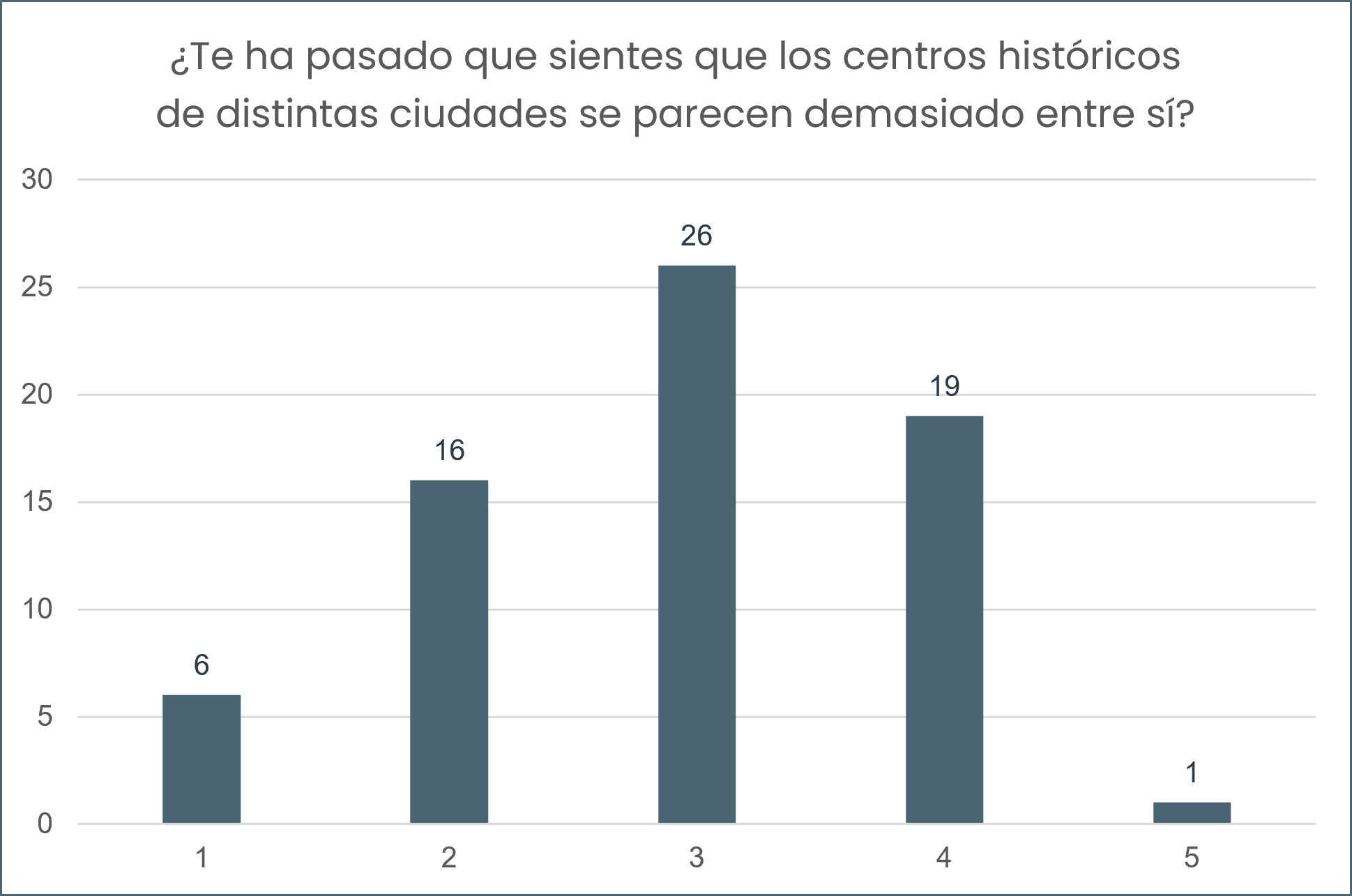


Observaciones


More than 69% of users feel that historic districts look too much alike
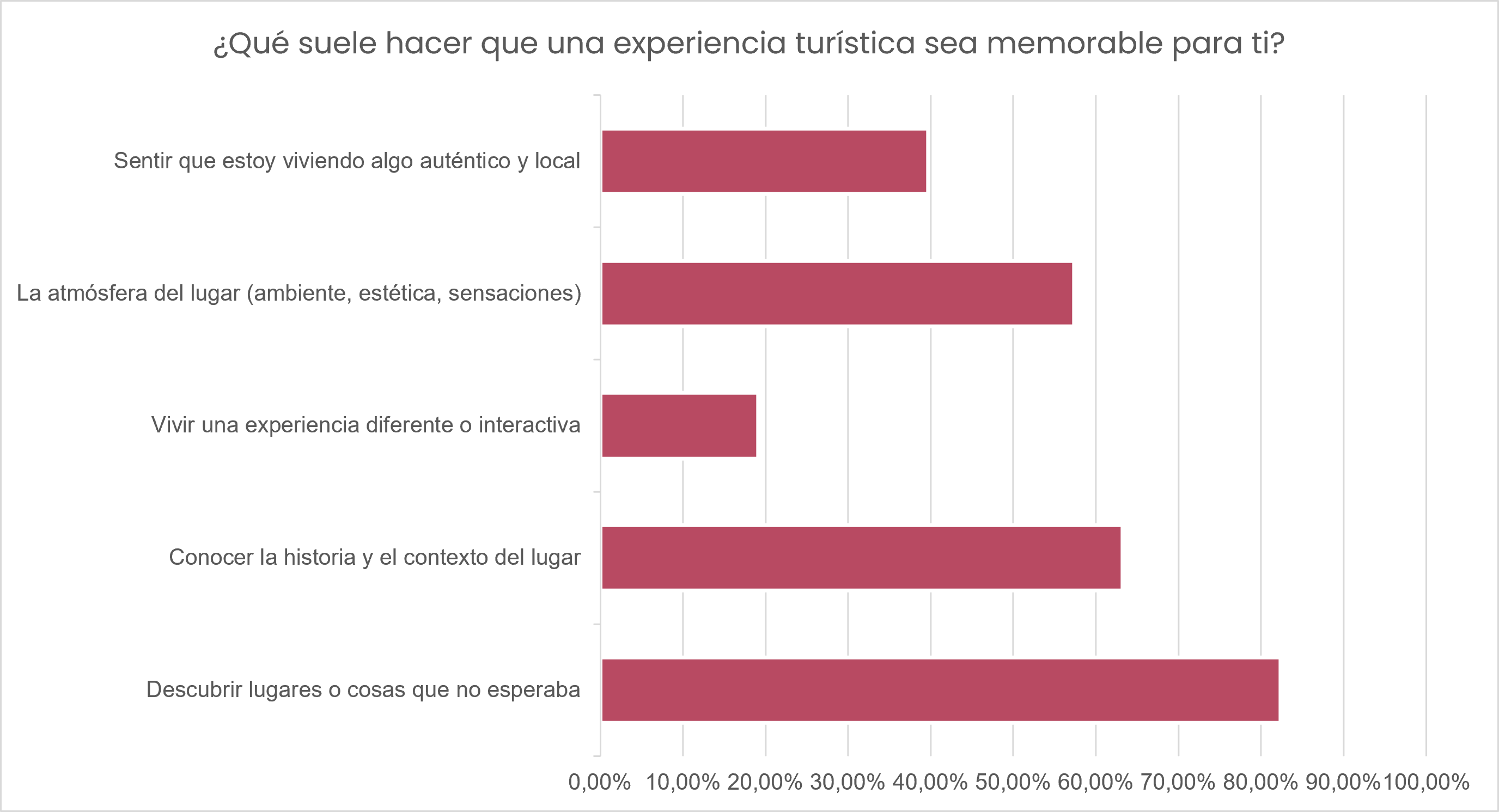

What users value most is the sense of discovery they get from exploring the city


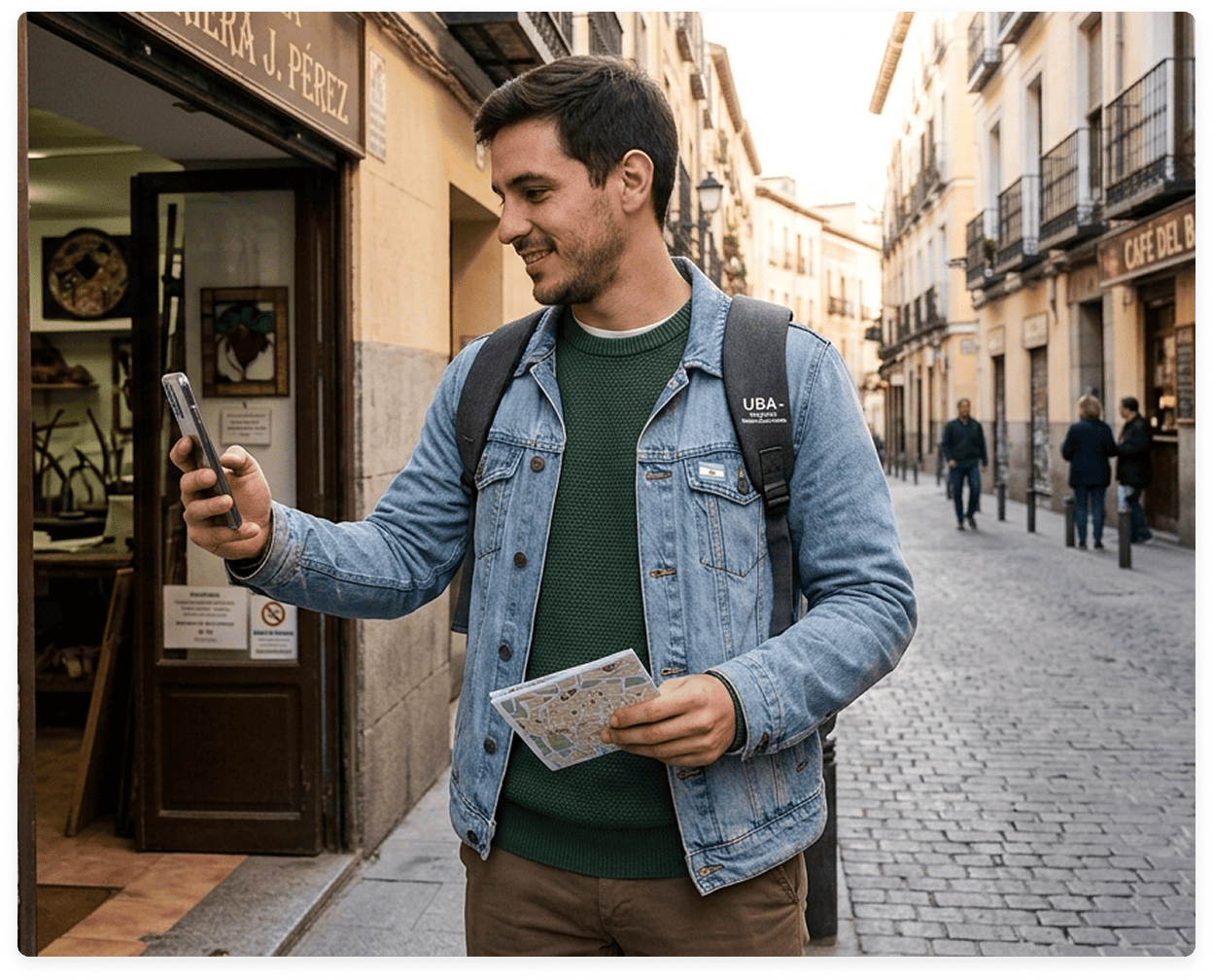
Interest Among Tourists Visiting Madrid in Ethnographic Research
Key Insights

Through secondary research, interviews, a questionnaire, and netnography, different patterns were identified:


  • Search for authenticity: Users want to discover a more authentic and less homogenised version of the city, especially when they have visited it before.

  • Immediate access to information: They value being able to access information quickly, without having to sign up, download anything, or go through unnecessary steps.

  • Flexible navigation: They need guidance that helps them make the most of their route while still giving them the freedom to take detours and explore.

  • Understanding cultural heritage: They want to understand the context and history of places without being overwhelmed by large amounts of information.

  • Subtle gamification: Users reject experiences that feel like a game, but value subtle elements that encourage curiosity, exploration, and discovery.

User Persona


Milton Martínez — The Efficient Explorer


Wants to discover the authentic essence of Madrid in a fast, simple, and contextual way, without digital friction or information overload.


Marta Hernández — The Local Rediscoverer


Seeks to reconnect emotionally with Madrid by discovering the hidden cultural and historical layers of a city she perceives as increasingly homogeneous and superficial.


Álvaro Moreno — The Selective Deep-Diver


Wants to discover new and less obvious perspectives of Madrid, exploring cultural content in an autonomous, flexible, and personalized way.


Our challenge


How might we design a more immersive tourism experience for Arcadia that enables visitors to discover Madrid’s heritage and authenticity through gamification and augmented reality, without making them the central focus of the experience?


Solution: Arcadia

Based on the research findings, an experience was designed that combines:


  • Stories and storytelling: Information presented through narratives, images, and short-form content to make it easier to understand and create a stronger connection with cultural heritage.

  • Augmented reality:Reconstructions that allow visitors to visualise what certain places in Madrid looked like in the past.

  • Subtle gamification: Mechanics focused on exploring, observing, and discovering, avoiding rankings, competition, and dynamics that make the experience feel like a game.


How would it work?


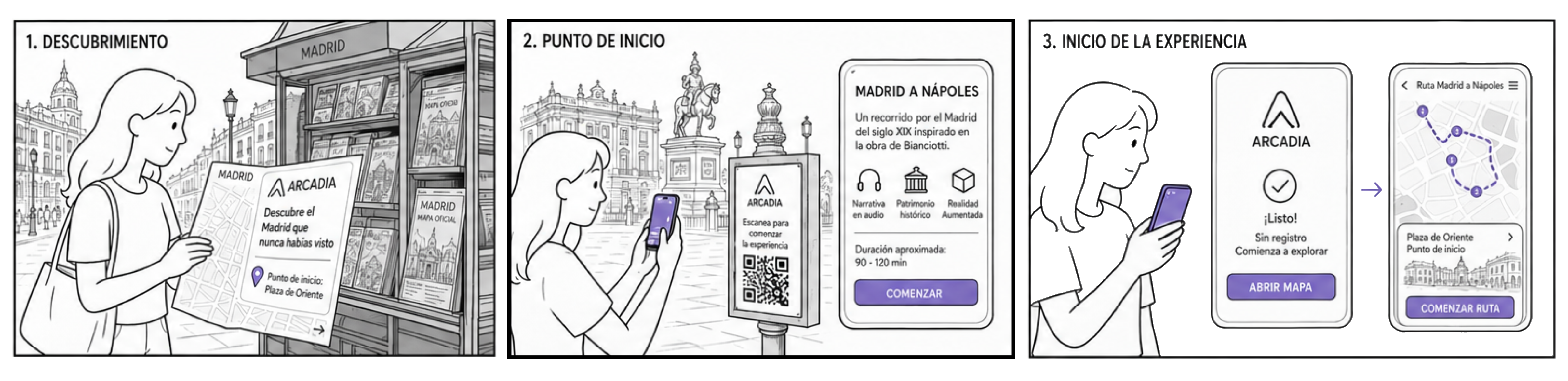
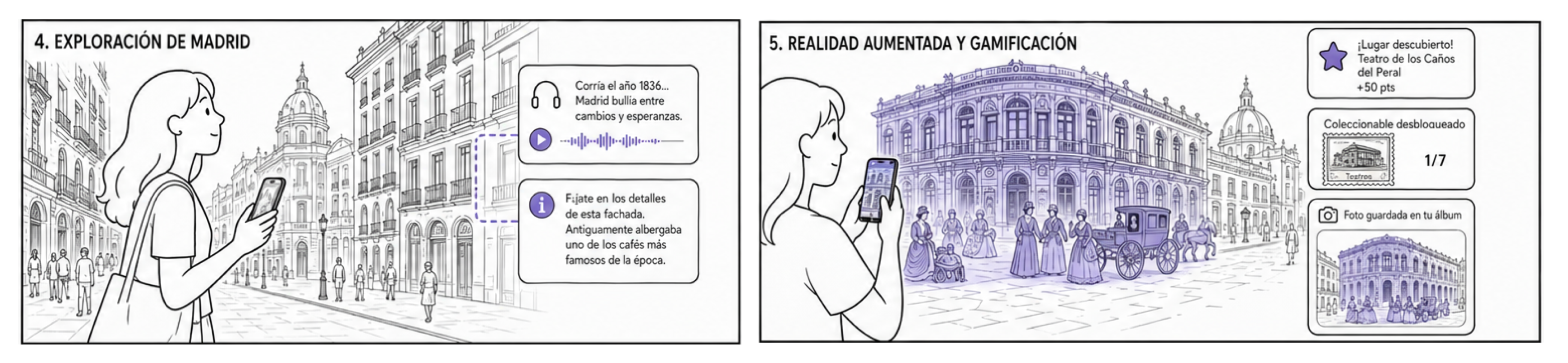
To represent the user journey, a storyboard was created. In the first sequence, the user discovers Arcadia at different points throughout the city and accesses the experience through a QR code. From the website, they can learn about the route, explore its content, and decide whether to continue with the full experience through the app.


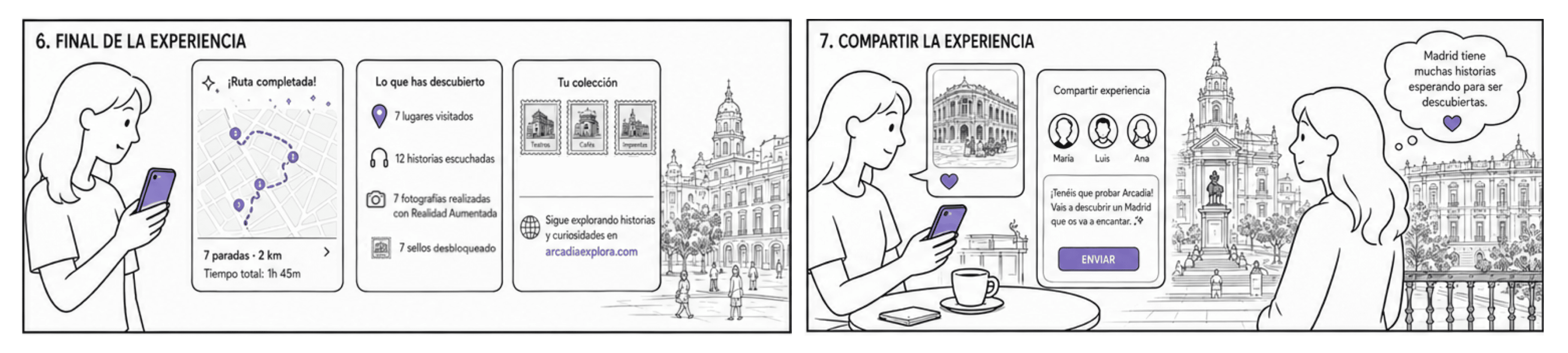
Throughout the journey, Arcadia combines a map, narratives, and concise information to guide the user without interrupting their exploration. At certain points, augmented reality allows users to visually reconstruct the past and discover details that might otherwise go unnoticed. Gamification is subtly integrated through challenges, photography, and rewards that encourage curiosity without turning the experience into a game.


At the end of the route, the app brings together everything experienced along the way: places visited, photographs, stories, augmented reality experiences, and achievements. The experience ends by sparking an interest in continuing to explore Madrid and discovering new hidden stories throughout the city.


Develop


Wireframes


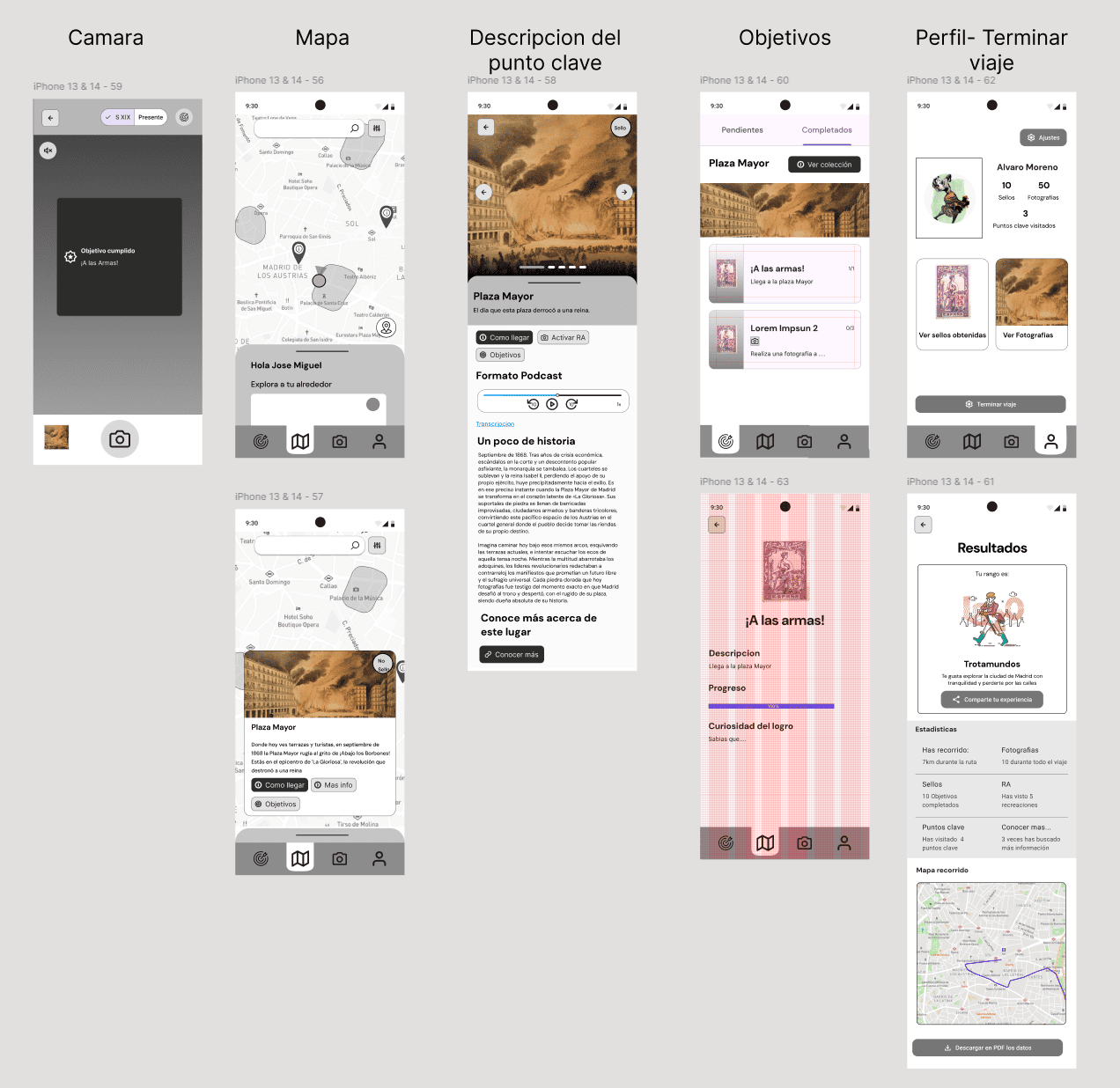
The low-fidelity wireframes helped define the app’s structure and validate its organization before moving on to the visual design.


Different content layouts, information hierarchies, and navigation flows were explored across the app’s main sections: map, camera, objectives, and profile.


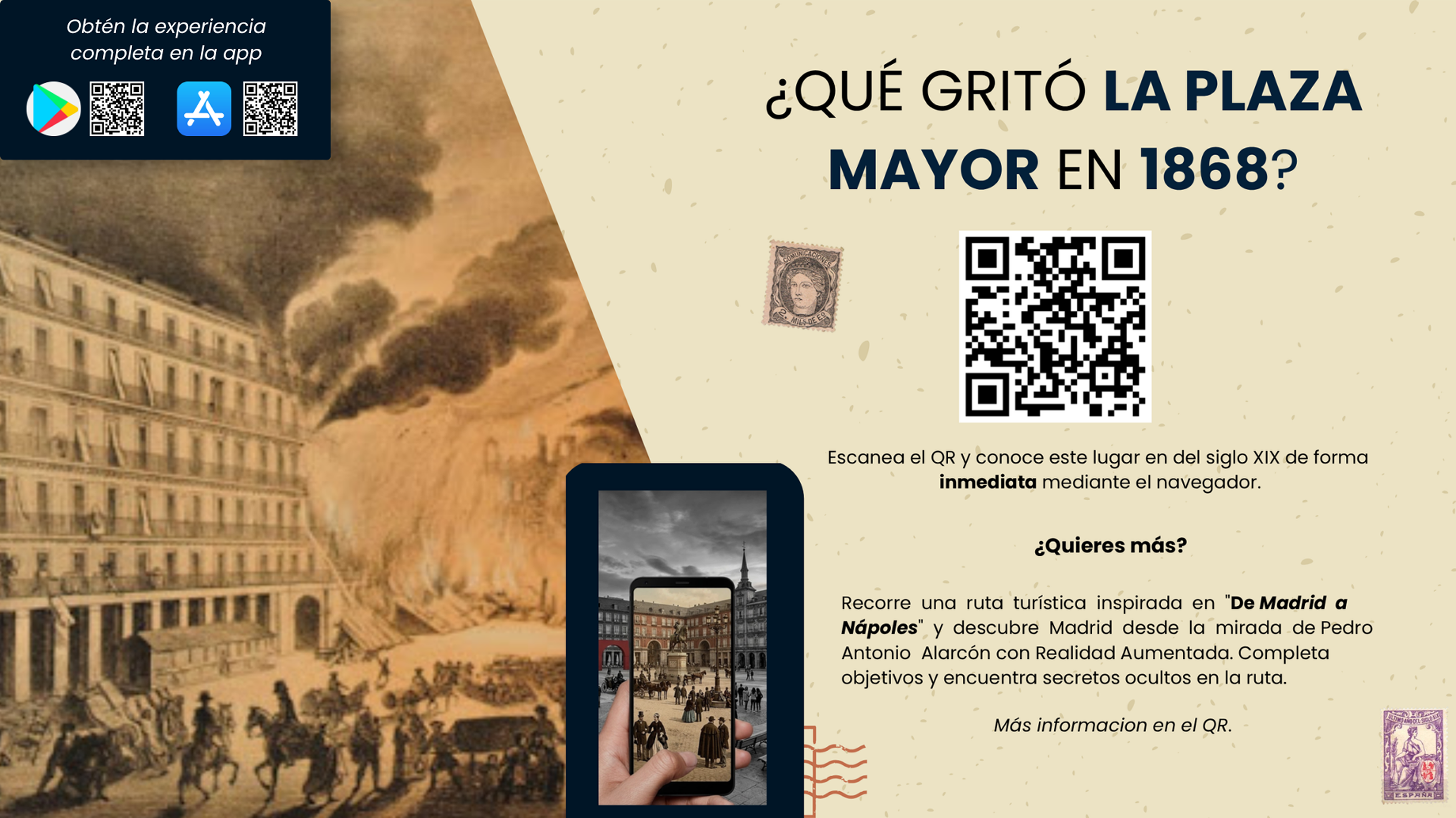
Poster


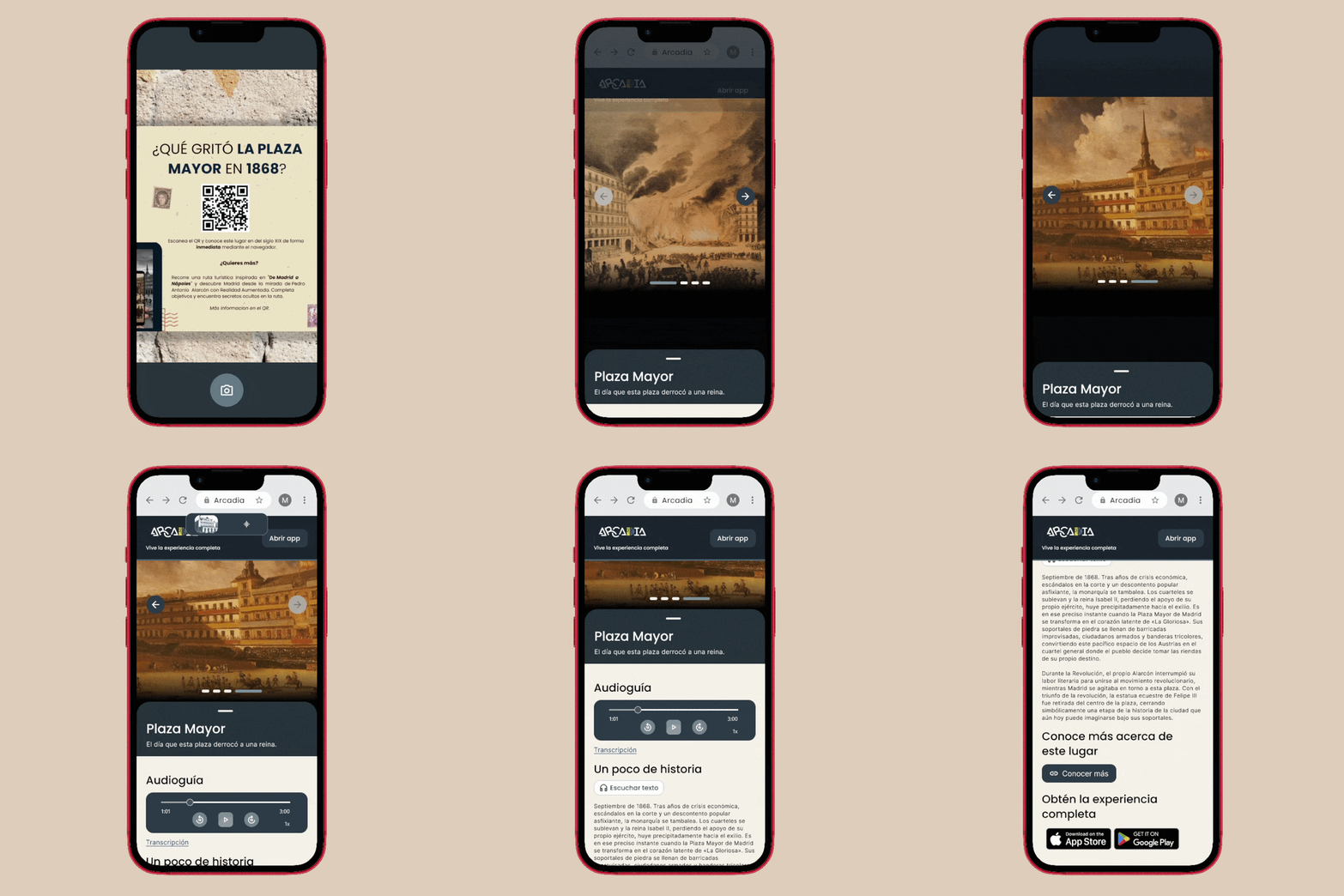
One way to discover the experience is through posters placed at key points along the route. These posters introduce users to the routes offered by Arcadia and allow them to try a demo version of the product.


Demo / Web Version


This version provides information quickly and concisely, allowing users to discover the route content without needing to download the app.


If the experience sparks their interest and they want to explore the route or the information they have discovered in more depth, they are given the option to download the Arcadia app and continue exploring.


Arcadia App


The most complete version of the experience. The app guides users along the route taken by Pedro Antonio de Alarcón through Madrid, allowing them to discover the places along the route and view historical reconstructions through augmented reality.


It also incorporates light gamification elements, such as searching for Easter eggs, to maintain users’ attention and encourage exploration throughout the journey.


Key Screens


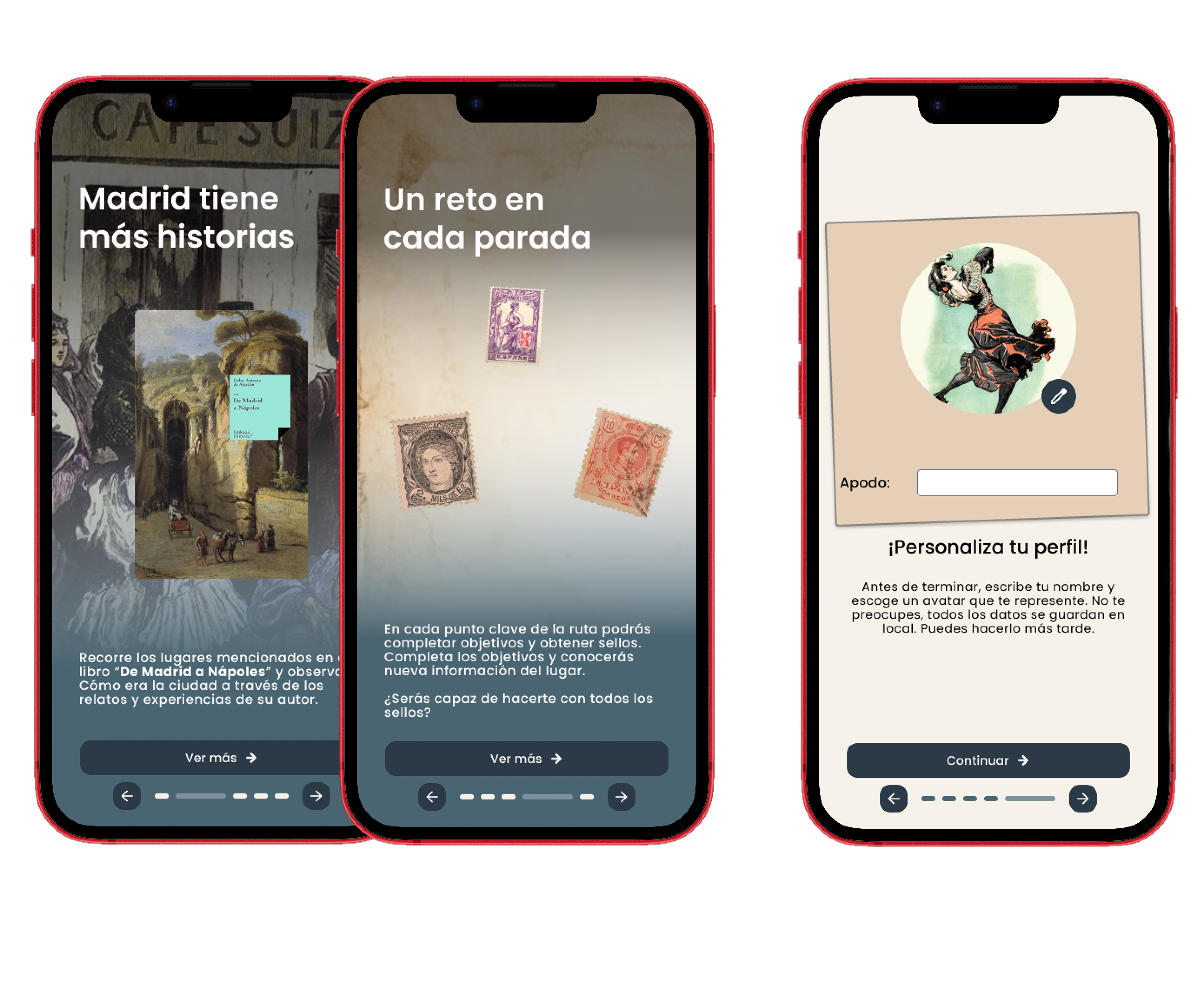
App Onboarding Without Registration


To reduce friction, the initial screens provide basic information about the app without requiring users to register. This responds to their need to access the experience immediately.


As part of the light gamification, users can optionally add a name and profile picture. This information is stored locally on the device.


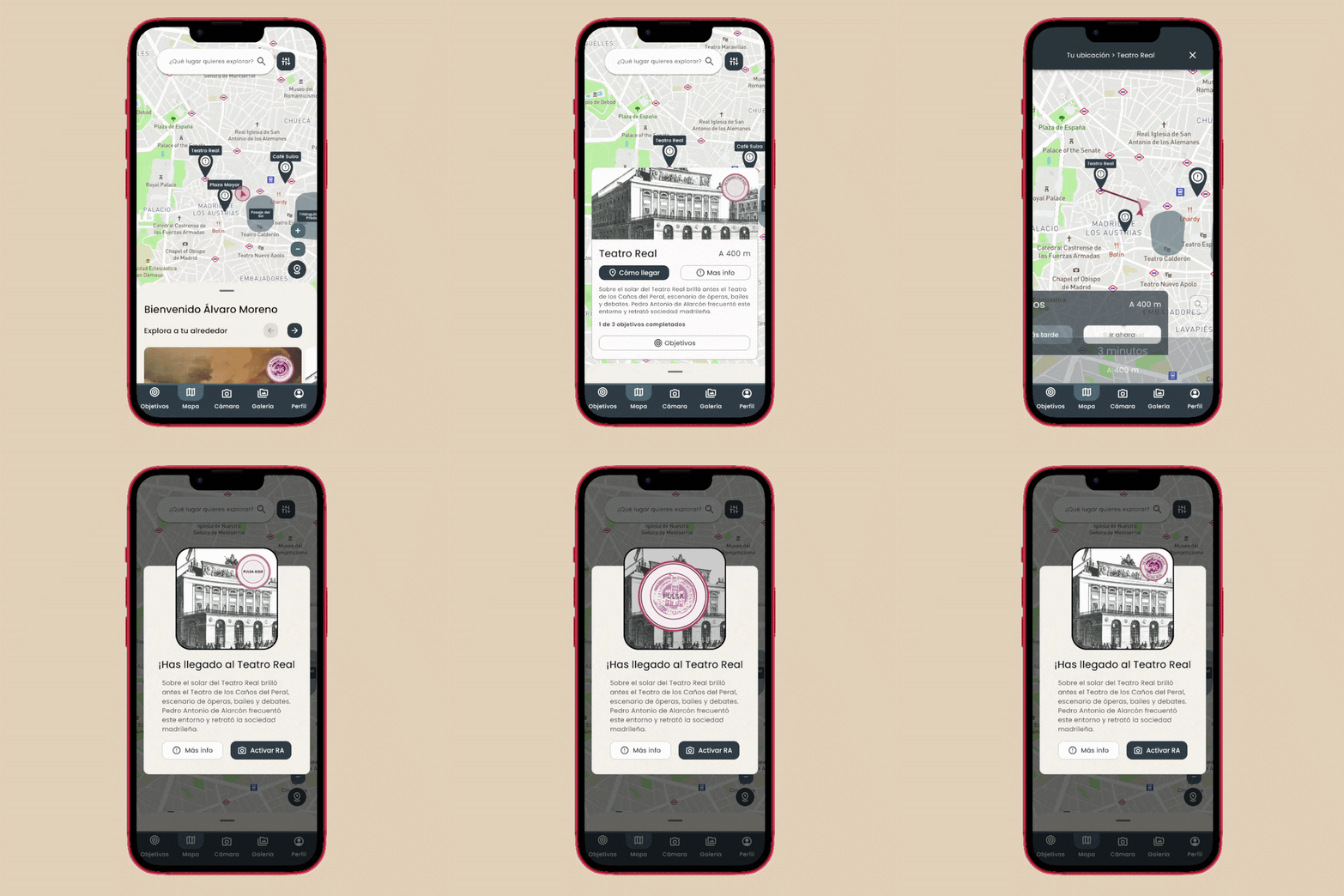
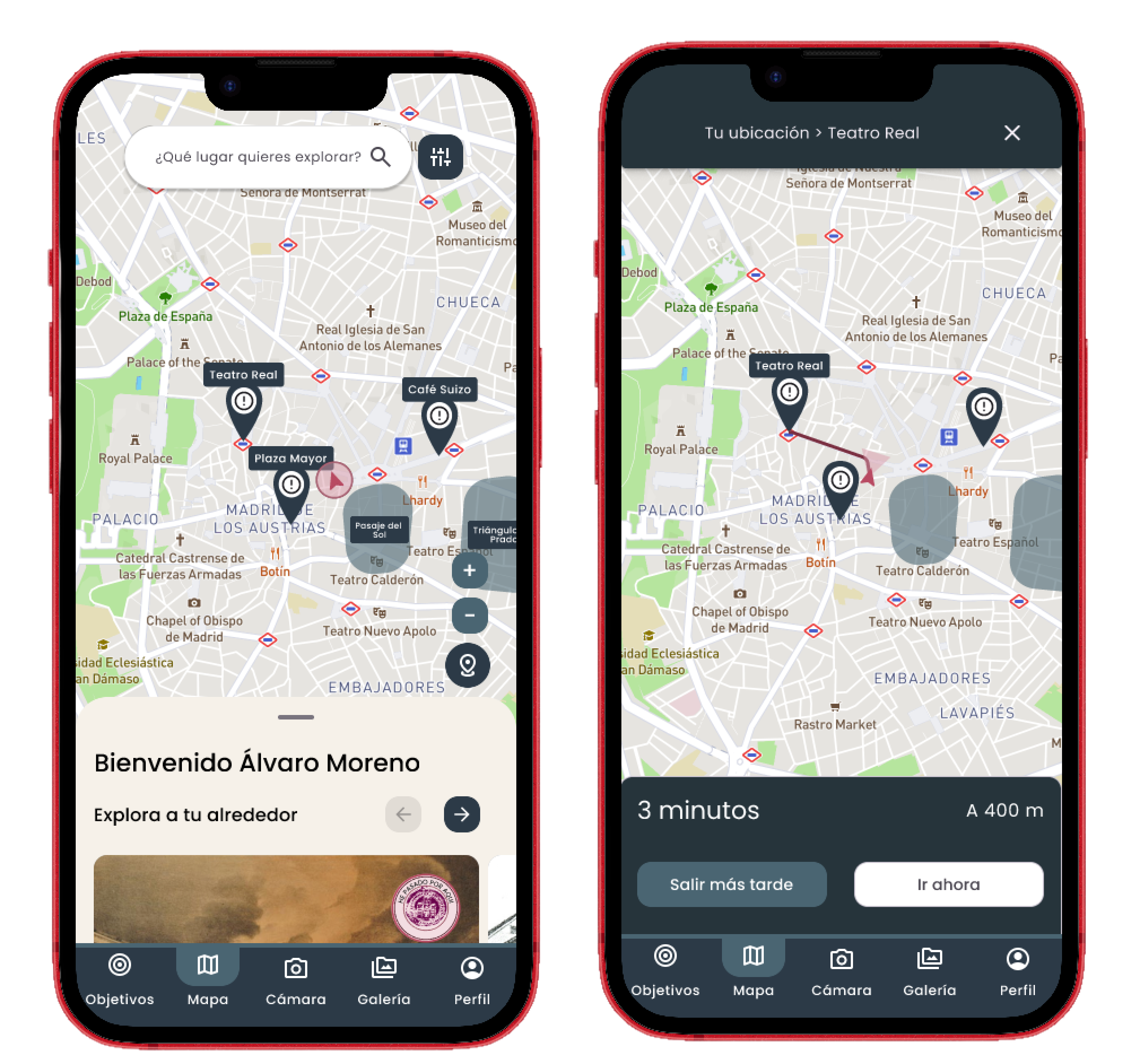
Map


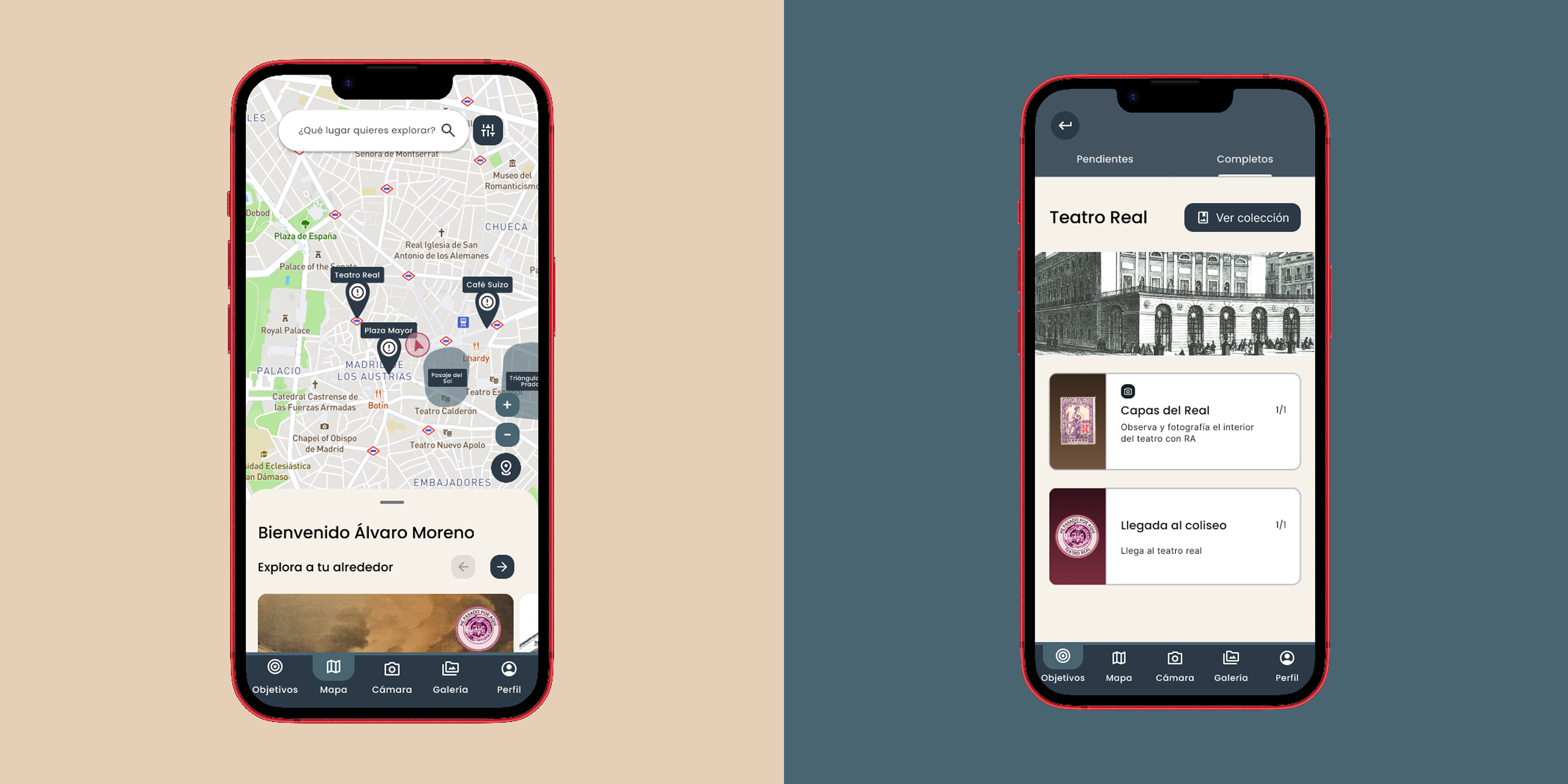
The map acts as the core of the experience, allowing users to identify the main route stops and other areas of interest.


Geolocation shows the routes closest to the user’s current position. The app also includes a recommendation system that suggests the most efficient order for visiting all the points of interest.


Stories from Each Place


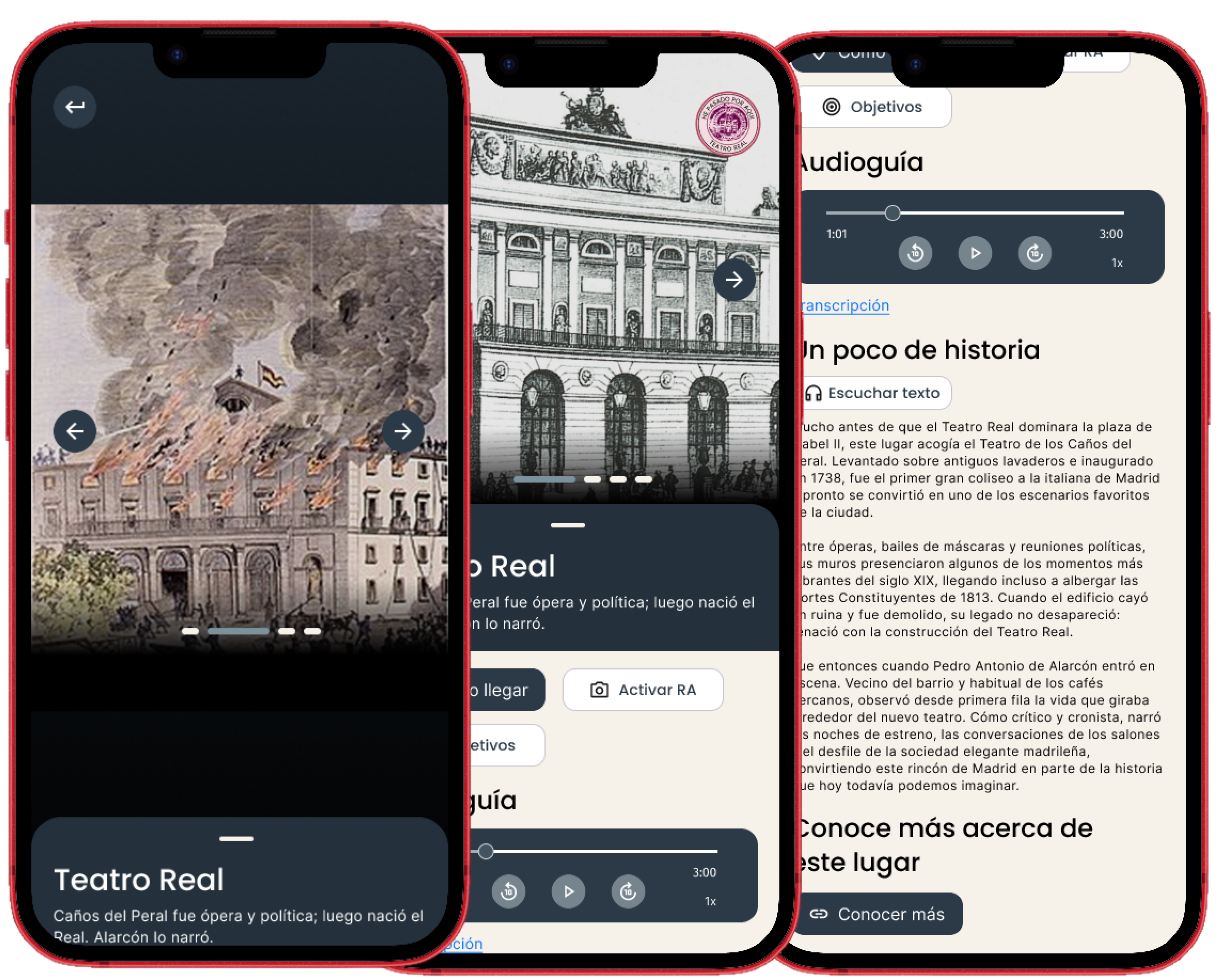
Each stop along the route presents its content in a simple and visual way, prioritizing images and historical reconstructions. Users can listen to a podcast or read short texts to learn more about the place’s history and context.


For those who want to explore further, an external project page provides additional information. This allows users to dive deeper into the content during the route or revisit it later.


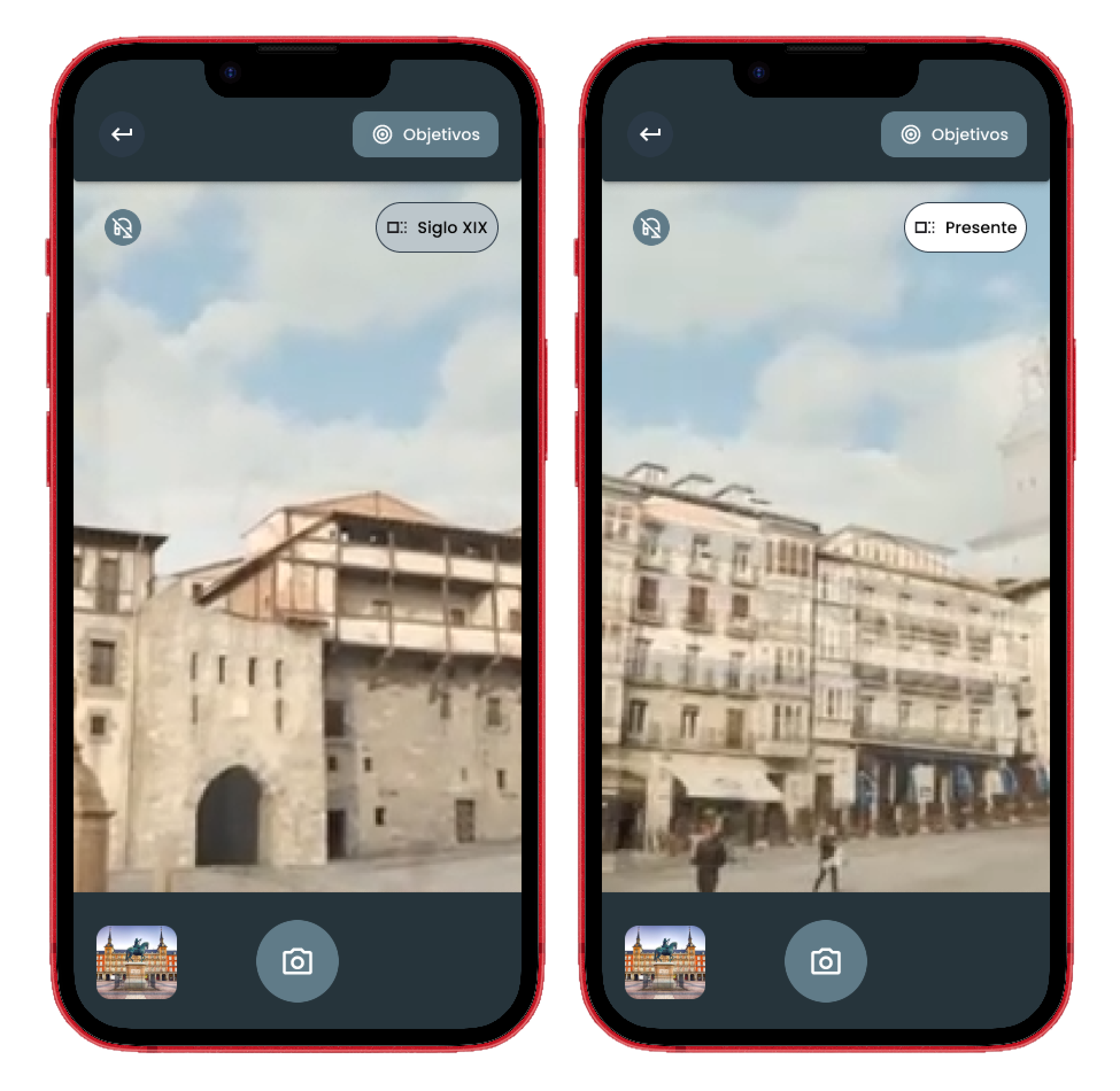
Augmented Reality


Users can see what the place looked like in the past and compare it to the space in front of them, discovering how it has changed over time.


Gamification


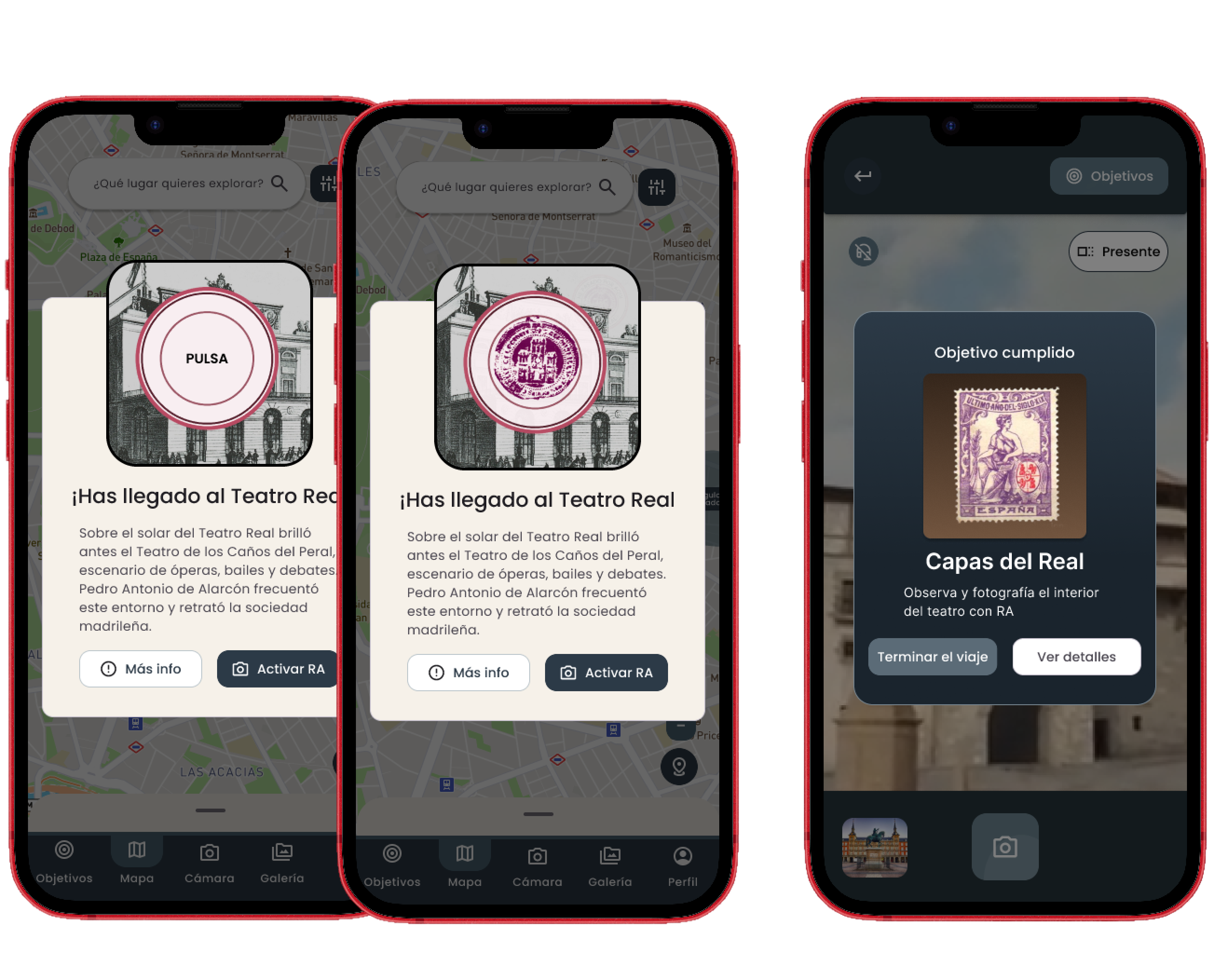
Light gamification elements are incorporated to maintain users’ attention and encourage exploration throughout the augmented reality experience. Through different objectives, users can discover Easter eggs and earn achievements in the form of stamps as they complete them.

Objectives may include reaching key points along the route, observing specific elements of historical monuments, or exploring certain locations for a set amount of time.


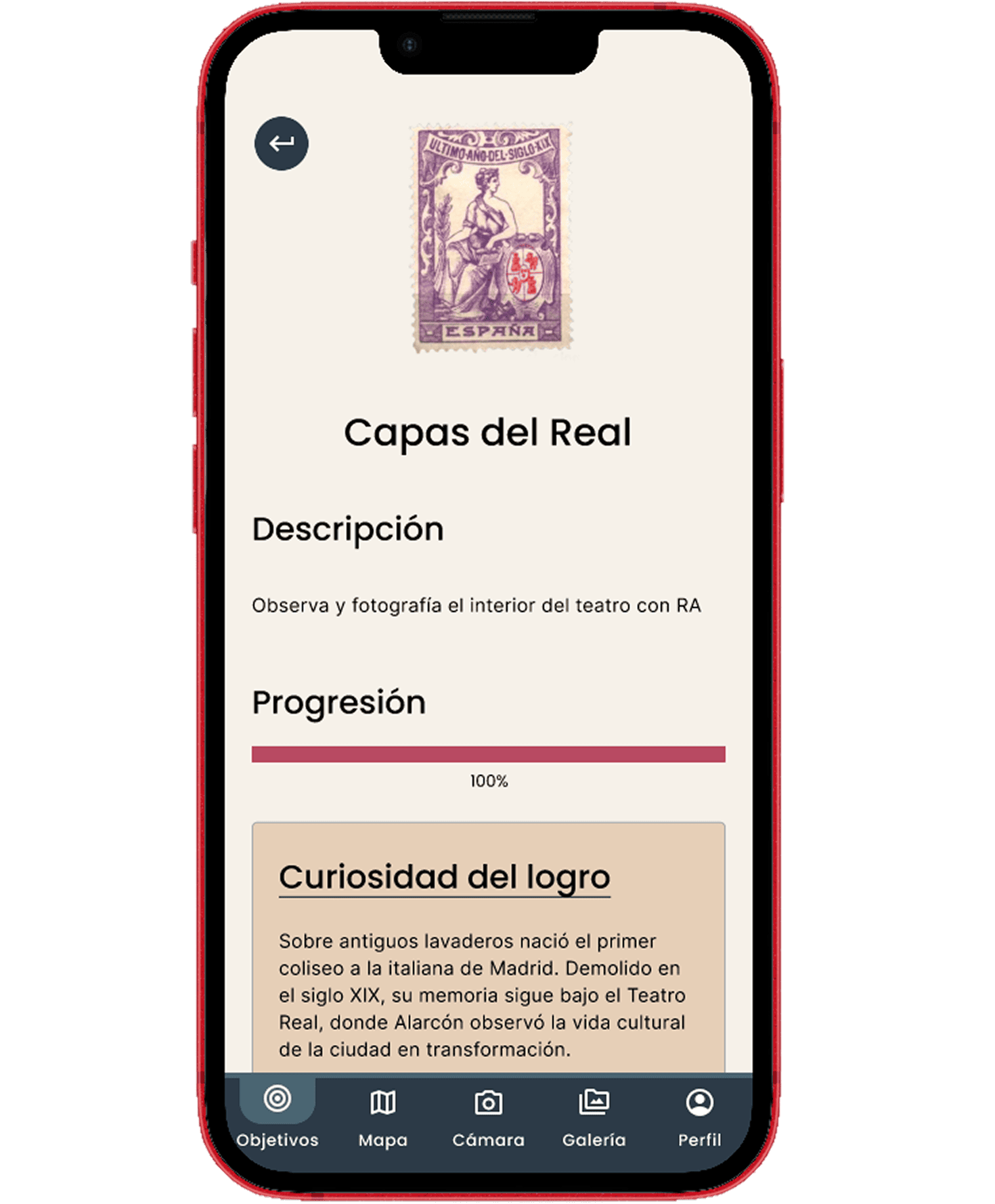
Objectives


Each achievement is linked to a historical fact or curiosity. By completing an achievement, users discover something new about the location while enjoying a more engaging experience.


Profile


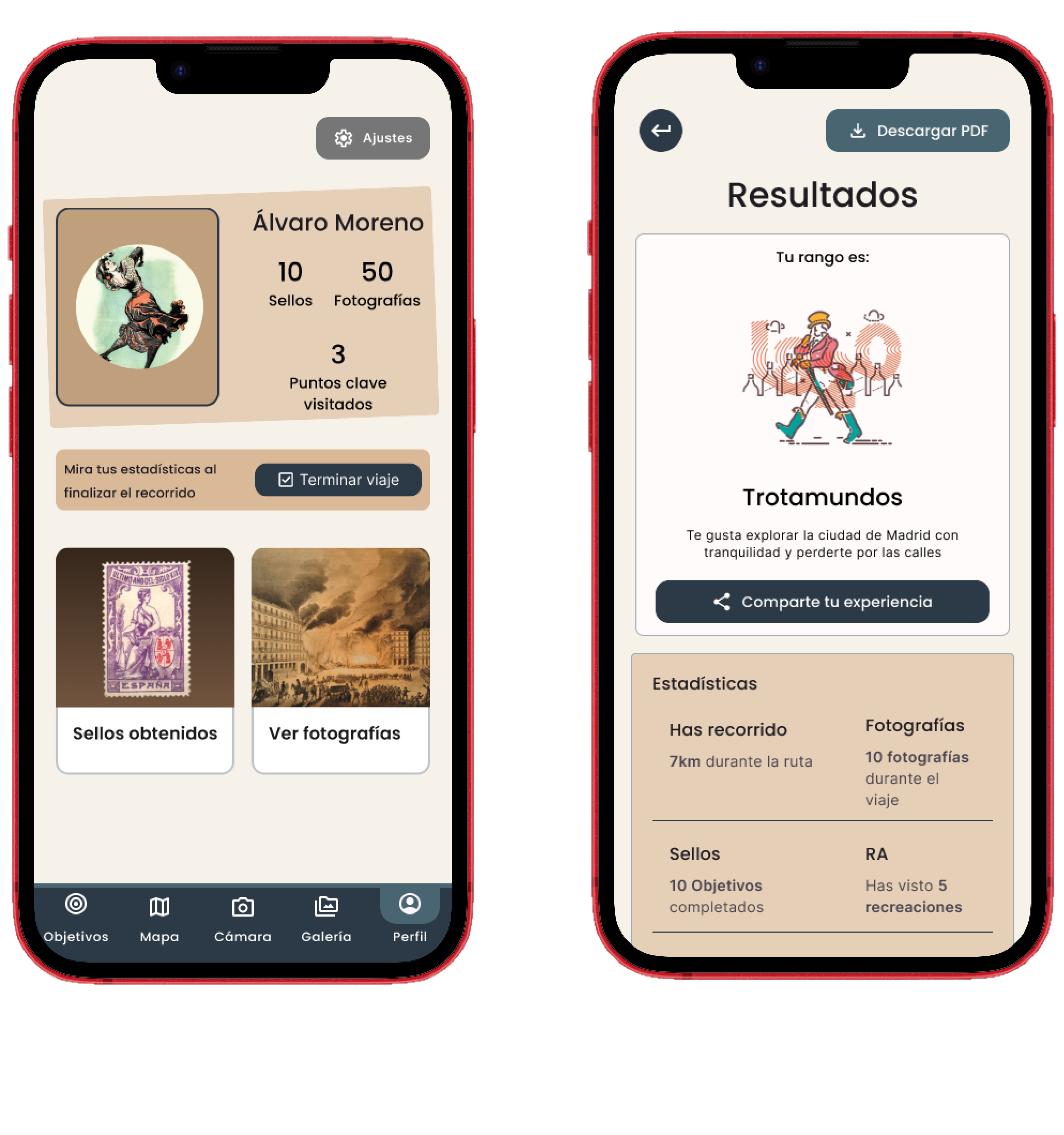
The profile brings together journey statistics, photographs, stamps, and elements discovered throughout the experience.

At the end of the journey, the system generates a classification based on how the user explored the city.

Prototipo en Figma


Learnings

Arcadia allowed me to go through the entire UX design process from start to finish, from research and data synthesis to experience definition, prototyping, and validation through user testing.


One of the main learnings was working on the project as part of a real team. This involved adapting to certain constraints related to the project’s scope and technical limitations during development.


I also strengthened my skills inInteraction Designworking on information architecture, user flows, wireframes, gamification, interaction design, and high-fidelity prototyping. The project also gave me the opportunity to explore how technologies such as augmented reality can be integrated into an experience without making them its central focus.


If you would like to explore the proposal in greater depth, I invite you to read the full Master’s thesis, where the project and its development are explained in detail.


Would you like to learn more about the UX projects I've worked on?


Feel free to check out the rest of my work.